
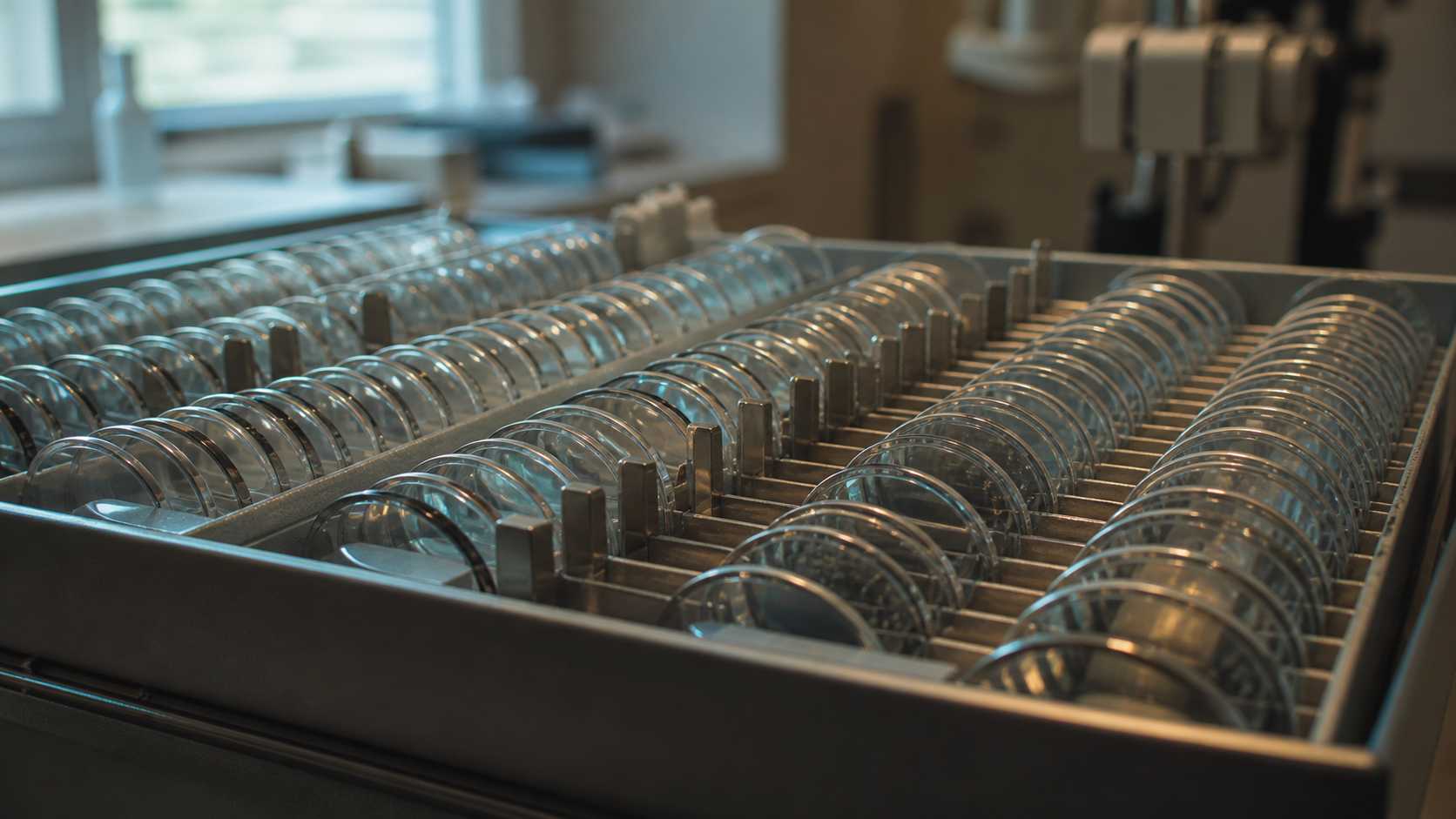
Seed Co., Ltd. has endorsed a JPY795-per-share tender offer from Luxshare Precision Cayman Limited. The deal is designed to remove the contact-lens maker from the Tokyo Stock Exchange Standard Market, end its public dividend and shareholder benefit program, and bring in the industrial reach of China's Luxshare group.
The control outcome is less obvious than the word “acquisition” might suggest. Founder Ryuji Arai is not tendering his 48.80% block. After the tender, squeeze-out and a later private share transfer, the disclosed plan is for Arai to hold 51% of Seed's voting rights and the Luxshare vehicle to hold 49%.
For international investors, the central issue is therefore not simply whether a 47.77% headline premium looks large. It is how the minimum acceptance condition, founder rollover, lack of a majority-of-minority threshold and pre-closing asset transfers fit together.
Key Takeaways

- The tender runs from August 27 to October 13, 2026, at JPY795 per share, with settlement scheduled to start on October 20.
- The minimum is only 5,408,800 shares, or 17.87% of Seed's reference share count. There is no maximum.
- Founder Arai's 48.80% block will not be tendered. The intended private-company voting split is Arai 51% and Luxshare 49%.
- JPY795 is 47.77% above the unaffected August 25 close, but it sits inside both disclosed DCF ranges and just above the top of the disclosed comparable-company ranges.
- The special committee asked Luxshare to consider a majority-of-minority condition. Luxshare rejected it, and the committee ultimately accepted the package with other safeguards.
- Seed's forecast JPY15 year-end dividend and shareholder benefit program will end only if the tender succeeds.
How Seed's Luxshare Tender Actually Works
Luxshare is using a Cayman vehicle to buy all Seed shares other than treasury stock and Arai's agreed non-tender block. If at least the minimum number of shares is offered, the bidder will buy every tendered share. If the minimum is missed, it will buy none.
Swipe horizontally to view all columns.
| Deal term | Disclosed condition |
|---|---|
| Tender price | JPY795 per share |
| Offer period | Aug. 27-Oct. 13, 2026 |
| Settlement starts | Oct. 20, 2026 |
| Minimum tenders | 5,408,800 shares |
| Minimum as a share of reference count | 17.87% |
| Maximum | None |
| Founder non-tender block | 14,768,400 shares, or 48.80% |
| Intended private voting split | Arai 51%; Luxshare 49% |
The offer is one step in a longer sequence. Seed says a share consolidation will be used to cash out remaining public holders if the bidder does not acquire every eligible share. An extraordinary shareholder meeting is expected around November 2026. A subsequent private transfer is intended to produce the final 51/49 voting split.
That sequence matters. This is a going-private transaction with a new strategic minority owner, not a conventional 100% foreign takeover. Arai remains the disclosed controlling shareholder after delisting.
What JPY795 Offers—and What the Minimum Does Not Require

The unaffected closing price on August 25 was JPY538. On that basis, JPY795 provides a 47.77% premium. The premium stays close to 50% against the disclosed one-, three- and six-month averages.
Swipe horizontally to view all columns.
| Reference price | Reference value | Offer premium |
|---|---|---|
| Aug. 25 close | JPY538 | 47.77% |
| One-month average | JPY530 | 50.00% |
| Three-month average | JPY511 | 55.58% |
| Six-month average | JPY536 | 48.32% |
The valuation evidence is more mixed than the premium alone. PwC's DCF analysis produced JPY453-JPY867 per share, while the bidder advisor's DCF range was JPY502-JPY856. The price is near the high end of both advisors' comparable-company ranges, but it remains within both DCF ranges.
Swipe horizontally to view all columns.
| Method | PwC range | Bidder advisor range |
|---|---|---|
| Market price | JPY511-579 | JPY511-538 |
| Comparable companies | JPY287-784 | JPY668-763 |
| DCF | JPY453-867 | JPY502-856 |
These ranges are not price targets. They are outputs from different methods and assumptions disclosed for the transaction. Investors should also note that negotiations raised the indicative price from JPY680 in October 2025 to JPY782 in November 2025 and finally JPY795 in August 2026.
The acceptance condition is the sharper governance question. The founder already controls voting instructions over 48.80% of Seed and will not tender. The minimum asks for only 17.87% of the reference share count; it does not require approval by a majority of the shares held by unaffiliated minority holders.
Seed's special committee asked Luxshare to consider such a majority-of-minority condition. Luxshare declined, arguing that a higher threshold could destabilize completion. The committee later concluded that the absence of this condition did not make the terms unfair because other safeguards were in place. That conclusion is important evidence, but public holders may still assign their own weight to the lower completion hurdle.
Founder Control Survives the Delisting
The planned ownership structure is the article's defining point. Arai's 48.80% block is held through four trust arrangements over which he retains voting instructions. He agreed not to tender those shares and to support the post-offer reorganization.
After the squeeze-out and share adjustments, Luxshare is expected to transfer enough private shares to Arai to create a 51%/49% split. The governance bargain is therefore clear: Luxshare contributes capital, manufacturing scale and China-market resources, while founder control remains intact.
For investors accustomed to transactions in which a strategic bidder obtains full control, that split changes the questions to ask. Board rights, reserved matters and practical influence under the shareholder agreement may matter as much as the headline ownership percentage. The public disclosure describes the target split but does not make the full private-company governance relationship available to public shareholders.
This structure also belongs in the broader debate over Tokyo Stock Exchange capital-efficiency reform. Delisting can remove quarterly market pressure, but it also ends public price discovery and the governance discipline that accompanies a listed minority.
The Carve-Outs Change What Sits Inside Seed
Two transfers are planned before the transaction closes. Seed will sell its Taiwan subsidiary and its 85.10% holding in Ocudevices to La Holdings, a company controlled by Arai. The transfers are designed to reverse if the tender does not succeed.
Seed says the Taiwan business should continue selling its products and using its brand under continuing commercial arrangements. Ocudevices, meanwhile, is being moved so that Seed's holding falls below the level that would make the medical-device business an equity-method affiliate, a step linked in the disclosure to foreign-investment review and technology-information controls.
The reviewed releases do not disclose the transfer consideration. That does not prove value leakage, but it means public investors cannot assess the economics from price alone. The relevant package is JPY795 in cash for the share, plus the fact that the post-deal Seed perimeter will differ from today's group.
The issue resembles other Japanese going-private cases where process quality matters as much as the premium. ATG Press's review of the Baudroie MBO explains why special committees, valuation ranges and minority-holder protections deserve separate analysis.
Why Luxshare Wants Seed's Manufacturing Platform
Seed identifies six broad areas of potential cooperation: China OEM production, stronger Chinese distribution, manufacturing automation, global talent development, region-specific production and sales, and greater freedom to invest for long-term growth.
Luxshare says its group plans to begin contact-lens production in China in 2028 and is preparing for annual capacity of up to 2 billion lenses. Seed could outsource branded production to that facility and use Luxshare's local logistics and sales network. The companies are also considering whether Luxshare can hold inventory and sell through Seed's Chinese subsidiary, potentially reducing Seed's working-capital burden.
The industrial logic is credible in outline. Luxshare has experience with automated electronics manufacturing, and Seed is trying to expand capacity while improving productivity. Yet every synergy here is a management plan. It is not included in Seed's standalone valuation business plan, and regulatory, quality-control and execution risks remain.
The Operating Baseline Is Growth With Margin Pressure
Seed entered the deal process with sales growth but softer quarterly earnings. In the June 2026 quarter, sales rose 3.5% to JPY8.85 billion, while operating profit fell 2.0% and attributable profit fell 11.9%.
Swipe horizontally to view all columns.
| JPY millions | FY2026 actual | FY2027 company forecast | Q1 FY2027 actual |
|---|---|---|---|
| Net sales | 33,942 | 37,000 | 8,848 |
| Operating profit | 1,439 | 2,200 | 618 |
| Ordinary profit | 1,406 | 1,750 | 517 |
| Profit attributable to owners | 1,135 | 1,350 | 336 |
The full-year forecast still calls for 9.0% sales growth and 52.8% operating-profit growth. This gap between the first-quarter margin trend and the annual target raises execution risk, especially as Seed continues investing in production capacity.
Management's valuation plan extends beyond public guidance, with sales rising to JPY51.26 billion and operating profit to JPY4.63 billion by FY2031. Those figures informed valuation work; they are not the company's current market guidance and do not include Luxshare synergies.
Dividend and Shareholder Benefits End With a Successful Offer
Seed cut its FY2027 year-end dividend forecast from JPY15 to zero and resolved to abolish its shareholder benefit program, both conditional on the tender succeeding. If the tender fails, those conditional resolutions do not take effect under the announced terms.
For a holder deciding whether to tender, the JPY795 cash price should therefore be compared with a scenario in which successful completion removes both the listed share and its expected income benefits. The canceled JPY15 dividend should not be added mechanically to JPY795: the bidder explicitly set the offer price on the assumption that the dividend would not be paid.
The benefit change also illustrates why transaction-driven abolition differs from routine shareholder-return policy. For context, see ATG Press's guide to Japanese shareholder-return policies.
What International Investors Should Monitor
The immediate milestones are the October 13 tender deadline and the 5,408,800-share minimum. If the tender succeeds, investors should then watch for settlement on October 20, details of the extraordinary meeting, the consolidation ratio, the timing of the delisting and execution of the asset transfers.
There are four practical risks.
1. Completion risk: tenders below the minimum cause the bidder to purchase nothing. 2. Timing risk: extensions, regulatory conditions or procedural delays could shift settlement and delisting. 3. Perimeter risk: the Taiwan subsidiary and Ocudevices transfer before the final private ownership structure is established. 4. Execution risk: China production, automation and distribution benefits may take years and are not guaranteed.
Investors using Japanese disclosures should verify the original filings rather than depend only on machine translation. ATG Press's guide to English-language Japanese filings explains a practical source hierarchy.
The cleanest interpretation is this: JPY795 offers a substantial market premium and follows a documented price increase, but the deal's unusual feature is the allocation of control. Luxshare becomes a large strategic owner; founder Arai remains in charge; and public minority holders exit through a tender whose minimum is below a majority-of-minority threshold.
Sources
- Seed IR news and press releases — August 26, 2026 tender opinion, dividend and shareholder-benefit disclosures.
- Seed English IR library — FY2027 first-quarter and FY2026 financial results.
- TDnet disclosure service — Seed and Luxshare primary tender-offer filings dated August 26, 2026.
- Seed investor relations — company and investor-relations context.
Investment Disclaimer
This article is for general informational and educational purposes only. It does not constitute investment advice, a recommendation, an offer or a solicitation. Tender-offer decisions can have legal, tax, timing and custody consequences. Verify the original Japanese filings and consult qualified professional advisers before acting.

