

Japan's latest machinery-orders report sends two different signals. The headline total rose in May, but the measure investors usually watch for domestic business investment fell sharply.
The Cabinet Office said total machinery orders received by 280 manufacturers increased 9.5% from April on a seasonally adjusted basis. Private-sector machinery orders excluding volatile orders for ships and electric power companies fell 12.4%. That core series is important because it is designed to strip out large, irregular orders that can obscure the trend in autonomous capital investment.
For international readers, the message is not that Japan's capital-expenditure cycle has broken. It is that the investment story needs confirmation from the next few data releases. The Bank of Japan's June Tankan business survey still points to planned investment growth, but May's machinery-order split shows why one strong survey cannot settle the question.
Key Takeaways

- Japan's total machinery orders rose 9.5% month over month in May 2026, but the core private-sector series fell 12.4%.
- The core series excludes ships and electric-power orders because those orders are large, erratic and slow to complete.
- Manufacturing orders fell 14.9% from April, while nonmanufacturing orders excluding volatile items fell 9.3%.
- The BOJ Tankan still shows positive fiscal-year investment plans, including a 6.8% increase in all-enterprise fixed investment including land and an 8.8% increase in software, R&D and fixed investment excluding land.
- The June machinery-orders release, scheduled for August 19, will matter because the Cabinet Office's earlier April-June forecast expected core private orders to rise 0.3% for the quarter.
What Changed In May

The Machinery Orders Survey is not a direct measure of completed investment. The Cabinet Office describes it as an early way to understand trends in machinery-related capital investment, based on order books at major machinery manufacturers. It also warns that order values can be volatile because very large orders are booked in the month they are received.
That is why the May split matters. Broad demand looked strong, but the cleaner domestic private-sector measure moved in the opposite direction.
Swipe horizontally to view all columns.
| Indicator | Definition | April 2026 | May 2026 | May month-over-month change | Source and data date |
|---|---|---|---|---|---|
| Total machinery orders | All reported machinery orders, seasonally adjusted | JPY 4,038.8 billion | JPY 4,422.2 billion | +9.5% | Cabinet Office historical Excel, May 2026 release |
| Foreign demand | Orders from overseas users, seasonally adjusted | JPY 2,233.7 billion | JPY 2,135.5 billion | -4.4% | Cabinet Office historical Excel, May 2026 release |
| Government demand | Orders from government users, seasonally adjusted | JPY 394.4 billion | JPY 374.7 billion | -5.0% | Cabinet Office historical Excel, May 2026 release |
| Private-sector orders excluding volatile orders | Private-sector orders excluding ships and electric power companies | JPY 1,098.5 billion | JPY 962.0 billion | -12.4% | Cabinet Office historical Excel, May 2026 release |
| Manufacturing | Private-sector manufacturing orders, seasonally adjusted | JPY 513.5 billion | JPY 437.2 billion | -14.9% | Cabinet Office historical Excel, May 2026 release |
| Nonmanufacturing excluding volatile orders | Private-sector nonmanufacturing orders excluding ships and electric power companies | JPY 570.1 billion | JPY 516.9 billion | -9.3% | Cabinet Office historical Excel, May 2026 release |
The sharp rise in the broad total therefore should not be read as a simple "capex is booming" signal. A large movement in nonmanufacturing orders that include volatile items can lift the total even when the Cabinet Office's preferred core private measure falls.
Why The Core Series Gets More Attention
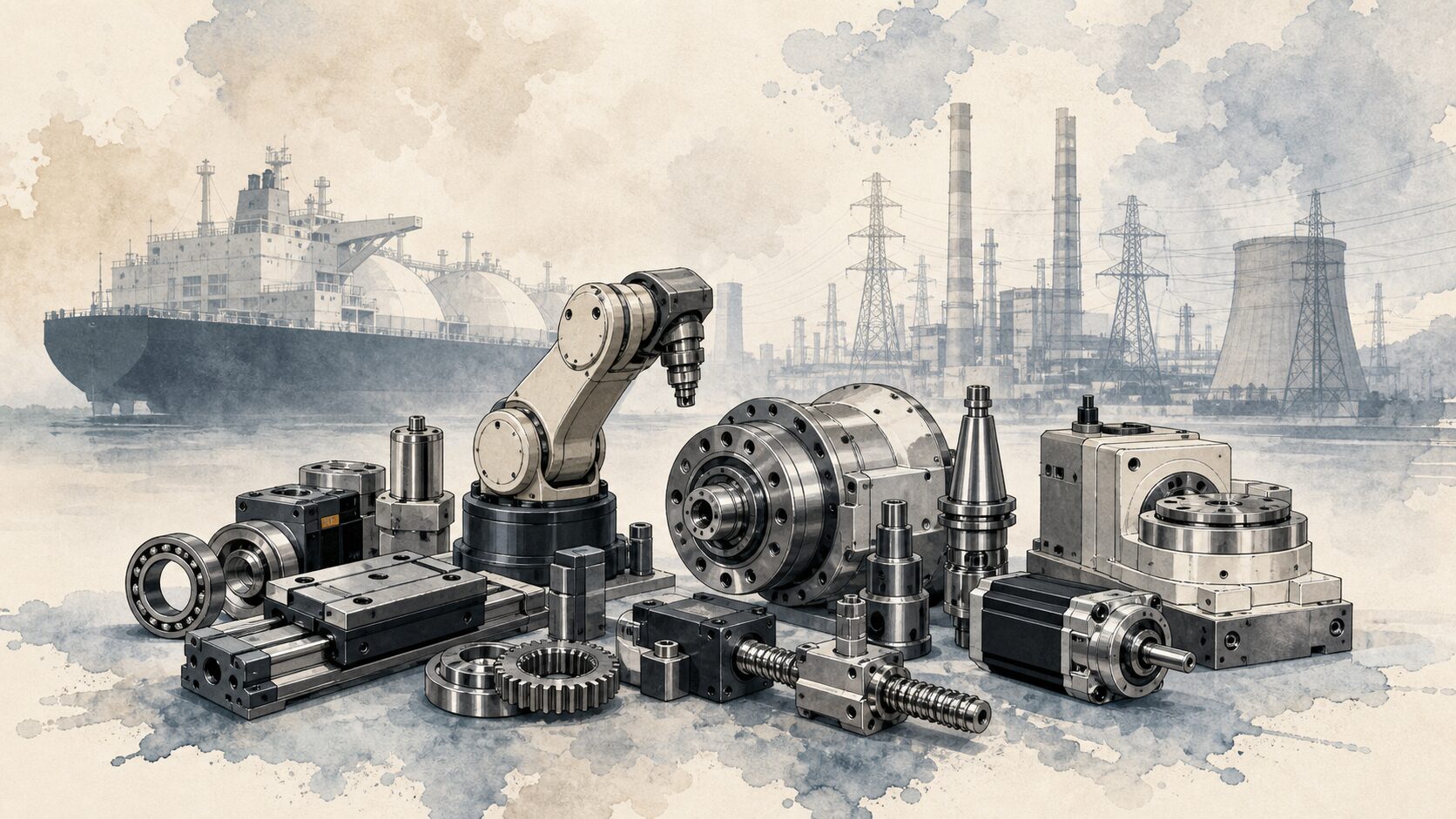
The Cabinet Office's methodology explains the logic. Orders for ships and electric power equipment are often large, irregular and connected to long production cycles. Because they are less useful for judging the direction of ordinary private capital spending over the next few quarters, the Cabinet Office publishes a private-sector series that excludes them.
That does not make the core series perfect. Machinery orders can still be noisy from month to month. But when manufacturing and nonmanufacturing core orders both fall, the report deserves attention from investors watching factory automation, machine tools, electrical machinery and other suppliers exposed to Japanese capital spending.
It also matters for the policy story. Japan's corporate-reform narrative depends partly on companies moving cash into higher-return investment, labor-saving technology and productivity upgrades. A weak machinery-order month does not disprove that shift, but it asks whether planned investment is converting into actual equipment orders quickly enough.
The Tankan Still Points To Investment Appetite
The Bank of Japan's June 2026 Tankan, released on July 1, gives a more constructive backdrop. The Tankan is the BOJ's closely watched short-term survey of enterprise sentiment and plans. Its June survey period ran from May 28 to June 30, overlapping the period when companies were digesting the same business conditions reflected in machinery demand.
Swipe horizontally to view all columns.
| BOJ Tankan indicator | Period or survey date | Reading | Definition | Source |
|---|---|---|---|---|
| Large manufacturers' business conditions DI | June 2026 survey | 22 | Percentage-point balance of firms seeing conditions as favorable minus unfavorable | BOJ Tankan Outline, July 1, 2026 |
| Large nonmanufacturers' business conditions DI | June 2026 survey | 37 | Same BOJ diffusion-index definition | BOJ Tankan Outline, July 1, 2026 |
| All-enterprise fixed investment including land | FY2026 forecast | +6.8% year over year | Planned fixed investment including land purchasing expenses, excluding software and R&D | BOJ Tankan Outline, July 1, 2026 |
| All-enterprise software, R&D and fixed investment excluding land | FY2026 forecast | +8.8% year over year | Planned software, R&D and fixed investment excluding land purchasing expenses | BOJ Tankan Outline, July 1, 2026 |
| All-enterprise production-capacity DI | June 2026 survey | -2 | Excessive capacity minus insufficient capacity; a negative reading points to more firms reporting insufficient capacity | BOJ Tankan Outline, July 1, 2026 |
This is the tension international readers should watch. Surveyed companies are still planning to spend, and the production-capacity balance suggests capacity is not obviously excessive. Yet the May machinery-order data show a short-term pullback in core equipment demand.
The clean interpretation is mixed rather than bearish. If June orders rebound, May may look like noise in a volatile series. If June is also weak, the quarter could fall short of the Cabinet Office's March forecast, which had expected private-sector orders excluding volatile orders to rise 0.3% in April-June.
What To Watch Next

Three checks matter more than the May headline.
First, watch the June machinery-orders release. The Cabinet Office's schedule lists the June report for August 19, 2026. Because the March release included a forecast for April-June, June will help show whether May was an interruption or the start of a softer quarter.
Second, watch whether weakness stays concentrated in machinery or spreads into other investment indicators. The Tankan's capex plans include broader fixed investment, software and R&D, so a gap between machinery orders and planned investment may simply mean companies are spending more on software, data centers, automation design or construction than on machinery booked in this survey.
Third, watch the split between large companies and smaller firms. The June Tankan showed strong investment plans for large enterprises, while small enterprises remained more cautious in some categories. That difference matters for Japan because labor shortages and higher input costs often hit smaller firms first.
Market Context
For equity readers, the May data argue for selectivity. Machinery suppliers exposed to domestic investment may still benefit from Japan's longer-term need for automation and productivity upgrades, but the official data do not justify treating every capital-goods name as if demand is accelerating. The near-term evidence is uneven.
For macro readers, the report is a useful check on Japan's reform narrative. Higher wages, tighter labor markets, corporate-governance pressure and a weaker yen can all encourage investment, but orders still have to appear in company books. May's core decline shows that the conversion from intention to order flow can be bumpy.
This article is for informational purposes only and does not constitute investment advice.
Sources
- Cabinet Office, Economic and Social Research Institute: Machinery Orders in May, 2026, accessed July 16, 2026.
- Cabinet Office, Economic and Social Research Institute: Machinery Orders by Sectors historical Excel, accessed July 16, 2026.
- Cabinet Office, Economic and Social Research Institute: Explanation of Machinery Orders, accessed July 16, 2026.
- Cabinet Office, Economic and Social Research Institute: Machinery Orders in March, 2026 and Forecast for Apr.-Jun. 2026, accessed July 16, 2026.
- Cabinet Office, Economic and Social Research Institute: Release Schedule, accessed July 16, 2026.
- Bank of Japan: Tankan Outline (June 2026), released July 1, 2026.

