

Sony Group has one underlying ordinary share, but international investors will encounter it in two market wrappers: 6758 on the Tokyo Stock Exchange (TSE) and SONY, an American depositary receipt (ADR), on the New York Stock Exchange (NYSE). Sony states that each SONY ADR represents one Sony ordinary share. The ticker choice therefore changes the market, trading currency, trading hours and some account-level mechanics; it does not create two different operating companies.
That distinction matters because Sony is a diversified group spanning Game & Network Services, Music, Pictures, Entertainment Technology & Services, and Imaging & Sensing Solutions. A quote alone cannot tell a reader which listing they are looking at, whether currency has moved, or whether a corporate action has changed the per-share history. Sony’s official investor-relations pages are the starting point for those checks. See Sony’s stock FAQ.
Key takeaways

- 6758 is the Tokyo ordinary share; SONY is the NYSE ADR. Sony’s current Form 20-F says each ADS represented by an ADR corresponds to one ordinary share.
- One-for-one does not mean the displayed prices should be compared without context. The Tokyo security trades in yen and SONY trades in U.S. dollars; exchange rates, trading hours and market microstructure can create short-term differences.
- Start with the issuer’s documents, not a chart label. Sony’s English IR library, earnings releases and Form 20-F identify the legal issuer, reporting basis, listing structure and risks.
- A 5-for-1 stock split took effect on October 1, 2024. Historical charts and per-share figures need the relevant adjustment context.
One company, two market wrappers
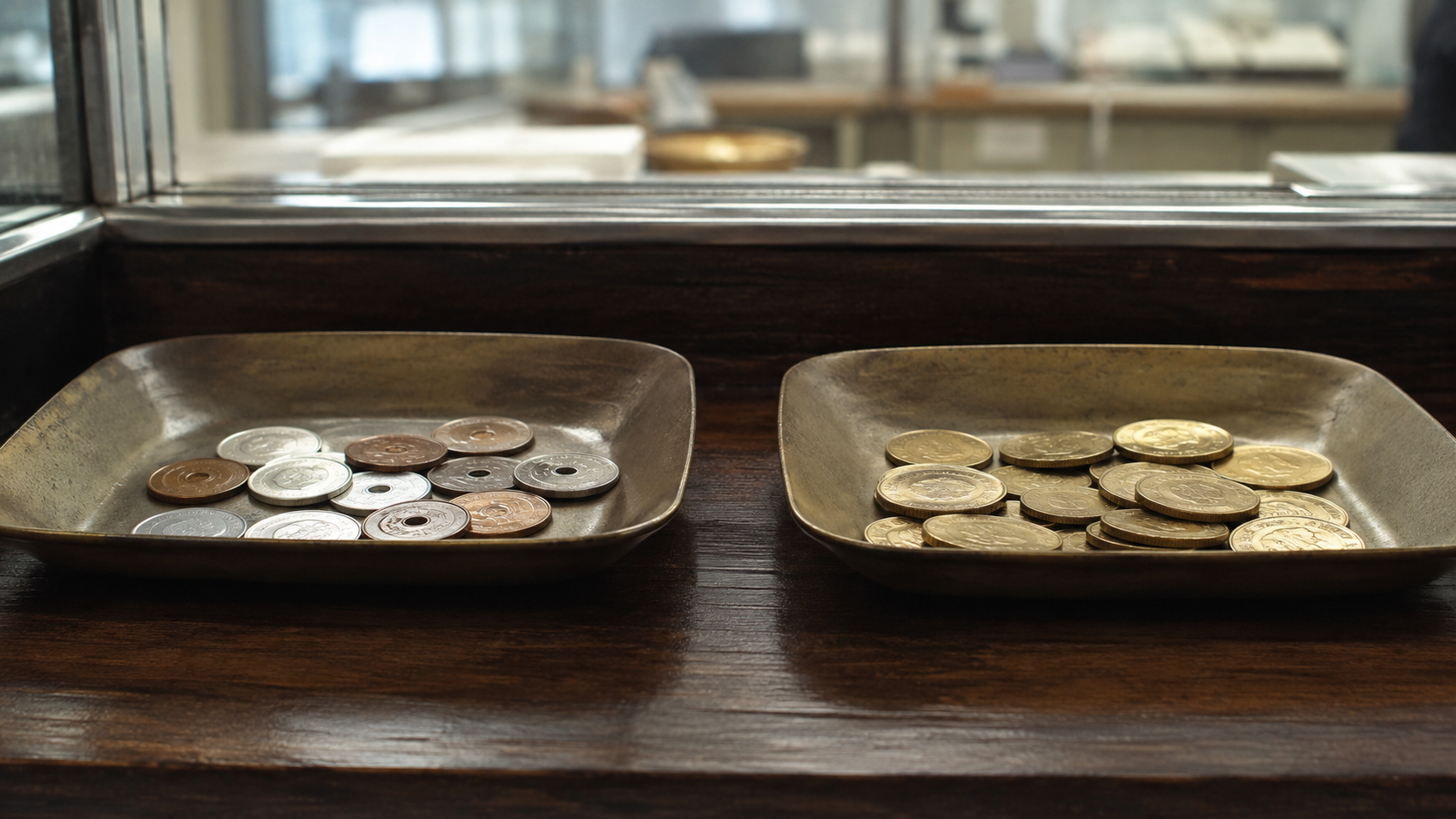
Sony Group Corporation’s common stock has been listed on the TSE under code 6758 since 1958, according to its FY2025 Form 20-F. In the United States, the company’s ADRs trade on the NYSE under the symbol SONY. Sony identifies JPMorgan Chase Bank, N.A. as the depositary in that filing. Read the Form 20-F listing details.
An ADR is not a second class of Sony operating business. It is a U.S.-dollar-denominated depositary form of ownership in a non-U.S. company. The depositary holds or arranges custody for the underlying foreign shares and issues the ADRs under the deposit agreement. Sony’s own FAQ and investor page say each Sony ADR represents one ordinary share. Sony’s investor guide explains the ADR relationship.
That one-for-one ratio is the key fact, but it is not a shortcut to a trading decision. Investors should still check their broker’s market access, custody charges, FX conversion terms, tax treatment and corporate-action handling. Those are account and jurisdiction questions, not evidence that the two tickers represent different Sony businesses.
6758 and SONY: what changes for a reader

Swipe horizontally to view all columns.
| Check | Tokyo ordinary share: 6758 | NYSE ADR: SONY | Why it matters |
|---|---|---|---|
| Listing venue | Tokyo Stock Exchange | New York Stock Exchange | Trading sessions, holiday calendars and market rules differ. |
| Trading currency | Japanese yen | U.S. dollars | A price comparison requires an FX reference at a stated time. |
| Underlying economic interest | Sony ordinary share | ADR representing one Sony ordinary share | Sony states a 1 ADR = 1 ordinary share ratio. |
| Market label | TSE code 6758 | NYSE ticker SONY | Quote services can display different conventions and delayed data. |
| Research base | Sony’s English IR materials and Japanese-market disclosures | The same issuer’s IR materials and U.S. filing record | Use primary documents to test the company facts behind either ticker. |
The table is a research aid, not a conversion quote. A precise cross-market comparison also needs a contemporaneous yen-per-dollar rate and awareness of whether both markets were open. Tokyo and New York do not trade through the same local session, so an apparent gap can partly reflect different information times rather than a disagreement about the issuer’s value.
Sony’s current stock-information page and FAQ are particularly useful for basic identifiers: 6758 is the Tokyo code, SONY is the ADR ticker, and the company says it does not operate a shareholder-preference program. Open Sony’s stock-information page.
A four-step price-comparison check
Before comparing SONY with 6758, use this sequence:
1. Confirm the security and ratio. Verify the issuer, venue and ADR ratio in Sony’s latest Form 20-F or stock FAQ. Do not assume every Japanese ADR has the same ratio. 2. Align the observation time. Record when each quote was taken and whether each market was open, pre-market, closed or using delayed data. 3. State the FX convention. Translate the yen quote using a contemporaneous yen-per-dollar rate, then label the result as an indicative comparison rather than a live arbitrage calculation. 4. Check trading and custody frictions. Bid-ask spreads, broker commissions, FX charges, depositary fees, taxes and local settlement arrangements can matter more than a small displayed difference.
This process is deliberately more conservative than treating an ADR conversion as a guaranteed opportunity. Market access can be limited, quotations can be delayed and the costs applicable to an individual account vary. It is also why a chart should be treated as context rather than as the source for legal terms or corporate actions.
Where Sony’s official documents answer different questions
Sony’s English IR portal provides the quickest official path to earnings materials, annual reports, stock information and investor news. The FY2026 Q1 materials were released on July 31, 2026; use the reporting period shown in each document rather than assuming a calendar-year convention. Browse Sony’s earnings archive.
For a business map, Sony’s corporate data page lists Game & Network Services, Music, Pictures, Entertainment Technology & Services, Imaging & Sensing Solutions and other operations. The grouping is useful for reading results, but it should not be mistaken for separate listed equities. Review Sony’s corporate-data overview.
For listing mechanics and U.S. disclosure context, use the Form 20-F. For current results, use the relevant earnings release, presentation and transcript. For Japanese-company terminology and release timing, ATG Press’s guides to TDnet English filings, Japanese earnings reports and Japanese stock tickers and ADRs provide additional research context.
Sony stock chart: Tokyo listing context
This chart is contextual only and may display delayed data. It is not the source for Sony’s ADR ratio, results, dividend, stock split or corporate-action claims; use the issuer’s filings and releases for those facts.
The 2024 split and other interpretation risks
Sony says its most recent split was a five-for-one split effective October 1, 2024. A reader looking at older per-share data should check whether a provider has adjusted the series. Sony’s FAQ is the appropriate primary reference for the split date and ratio. See Sony’s stock FAQ.
There are broader business risks, too. Sony’s results combine several industries with different demand patterns, rights structures, investment cycles and currency sensitivities. A single product launch, film slate, game release, sensor cycle or exchange-rate move does not describe the entire group. The company’s earnings materials and Form 20-F are the proper places to examine segment information, risk factors and accounting changes.
What to watch next
- Sony’s next earnings date, presentation and transcript on the official IR portal.
- Any change to the ADR ratio, depositary arrangements, listing terms or corporate actions in Sony filings.
- The time and FX basis used whenever a comparison between 6758 and SONY is presented.
- Segment-level commentary in Game & Network Services, Music, Pictures, imaging and other businesses rather than a headline-only reading of consolidated results.
Sources
- Sony Group: Concerning Stock FAQ, accessed September 5, 2026.
- Sony Group: Invest in Sony, accessed September 5, 2026.
- Sony Group: Form 20-F for the fiscal year ended March 31, 2026, filed June 18, 2026, accessed September 5, 2026.
- Sony Group: Investor Relations portal and FY2026 Q1 materials, accessed September 5, 2026.
- Sony Group: Corporate Data, accessed September 5, 2026.
This article is for informational purposes only and does not constitute investment advice.

