
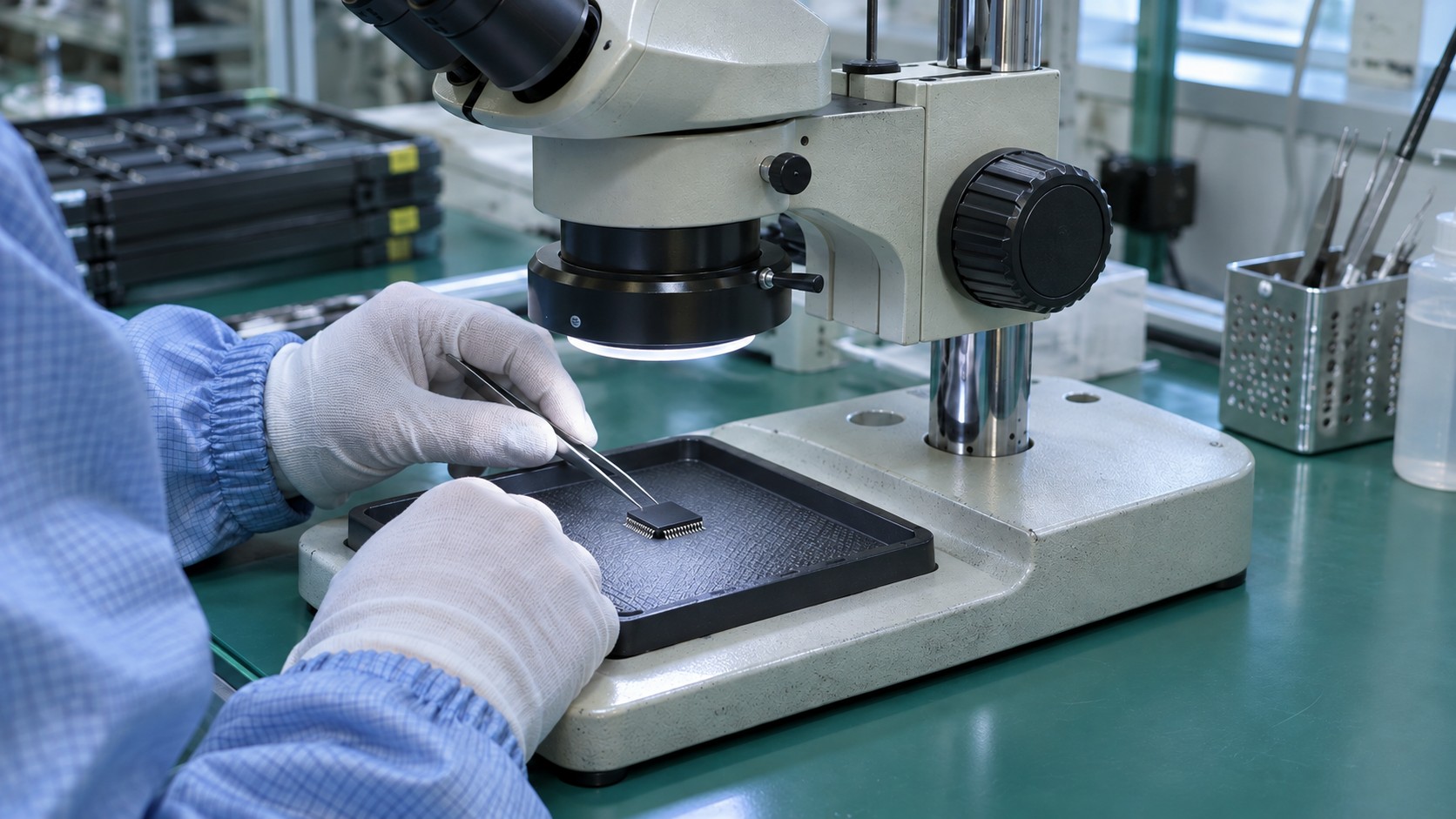
NAND flash retains data without power and is used mainly for storage; DRAM is working memory that generally loses its contents when power is removed. Kioxia's BiCS FLASH is 3D NAND, the kind of memory used in solid-state drives (SSDs), not the high-bandwidth memory (HBM) that is a form of DRAM. The distinction matters when comparing semiconductor businesses and their exposure to AI infrastructure.
Key Takeaways
- NAND is nonvolatile storage memory; DRAM is volatile working memory.
- An SSD is a complete storage device that normally contains NAND as well as a controller and may also contain DRAM.
- Kioxia's 10th-generation BiCS FLASH announcement describes samples of NAND devices, not a reported mass-production milestone or guaranteed revenue.
NAND flash vs DRAM: what each does
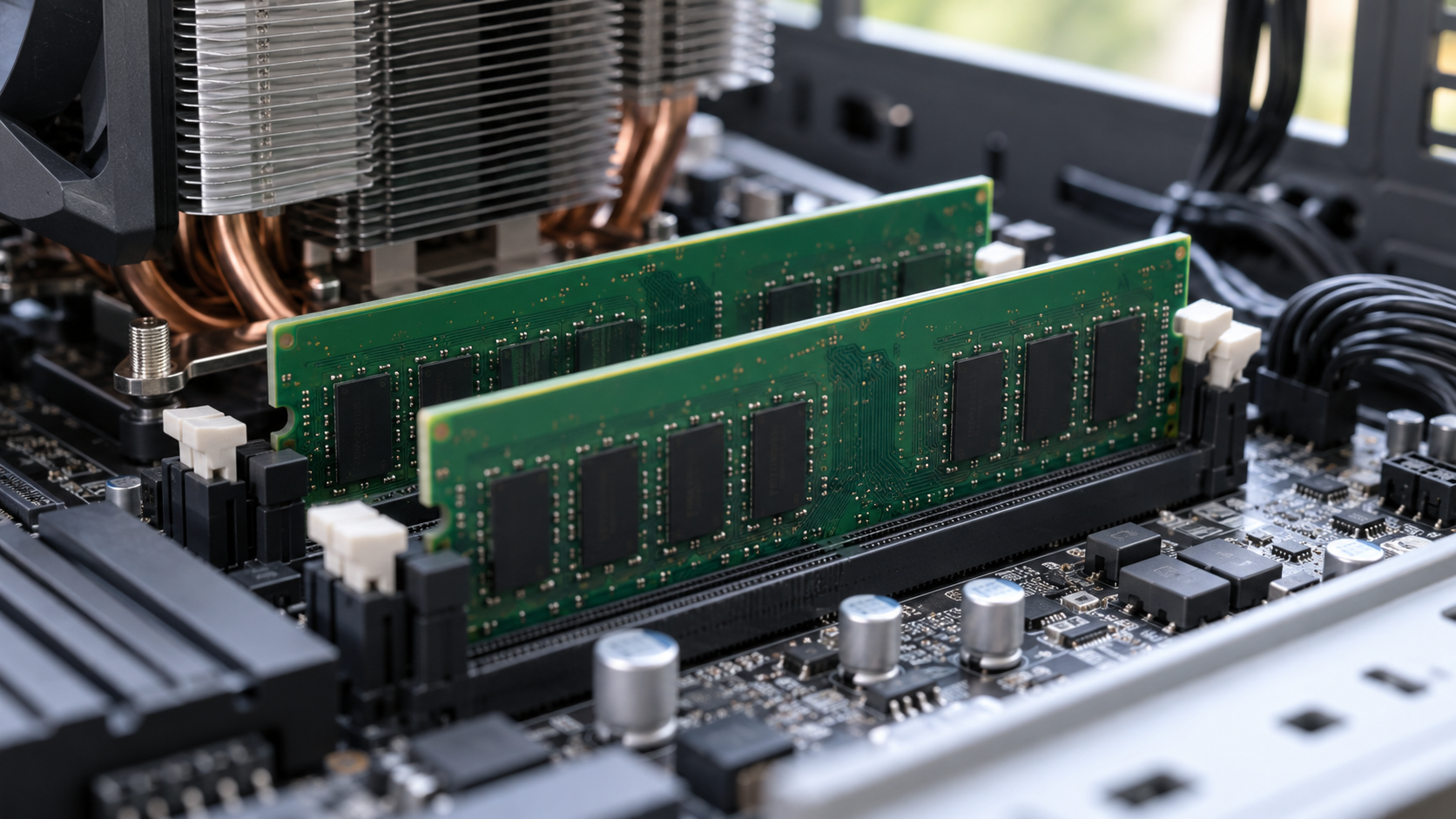
NAND keeps stored information when power is switched off, while DRAM generally needs power to retain its contents. Computers use the two for different jobs: a drive keeps files and software, while DRAM holds data the processor is actively using. Micron’s Form 10-Q product-technology definitions explain both categories.
Swipe horizontally to view all columns.
| Feature | NAND flash | DRAM |
|---|---|---|
| Keeps data without power? | Generally yes | Generally no |
| Typical role | Persistent storage | Working memory |
| Common form | Chips inside an SSD or memory card | Memory modules and other system memory |
| Example in the AI system | Storing datasets and model files | Supplying data to processors; HBM is a DRAM type |
A computer can use both at once. Their roles are complementary, and a change in demand for one product does not automatically imply an equal change in demand for the other.
Where Kioxia fits
Kioxia develops 3D NAND flash memory. In its BiCS FLASH technology explanation, the company describes building memory cells in a vertical structure. An SSD combines storage chips with other components; the NAND chip and finished drive are not interchangeable product categories. Some SSDs also use DRAM, so finding DRAM inside a drive does not make its persistent storage DRAM. IBM explains the SSD and flash distinction.

What Kioxia's sample announcement says
On July 3, 2026, Kioxia announced sample shipments of 1-terabit triple-level-cell devices using its 10th-generation BiCS FLASH technology. The company said they were intended primarily for enterprise and data-center SSDs. A sample shipment is an evaluation milestone: the announcement alone does not establish production volume, customer adoption or sales contribution.
The units matter. In a simplified conversion, 1 terabit ÷ 8 bits per byte = 0.125 terabytes, or 125 gigabytes using decimal units. That is nominal capacity for one memory device before product overhead; a finished drive's usable capacity depends on its design and the units used in its specifications.
What investors should compare
Start with product mix and reported economics instead of treating all memory demand as one market. Check how a company describes shipments and pricing for its actual products, its capital investment and the timing of customer qualification. A new chip generation can improve a product's specifications without revealing its commercial profitability.
- Identify whether the disclosure describes NAND chips, completed SSDs, DRAM or HBM.
- Separate samples, qualification, production and reported sales.
- Check the period and units used for shipments, prices and capacity.
- Compare company guidance with completed results and read the stated risks.
For related context, see ATG's guide to Micron's Hiroshima investment and HBM and its TSMC Japan fab explainer. These discuss different projects and technologies.
Sources
- Micron: Form 10-Q, product technologies (2024 Q3)
- Kioxia: BiCS FLASH technology
- Kioxia: 10th-generation sample shipments, July 2026
- IBM: Flash versus SSD storage
This article is for informational purposes only and does not constitute investment advice.

