

NTT IOWN is an infrastructure programme built around using light more deeply in networks and, over time, inside computing systems. Its practical importance is easy to overstate: NTT has launched an All-Photonics Network service, but other parts of the roadmap remain device development, proofs of concept or stated targets. The useful question is not whether IOWN is "the next internet"; it is which layer is being discussed and how far that layer has progressed.
NTT is listed on the Tokyo Stock Exchange Prime Market under code 9432. The company now uses AIOWN in its revised strategy to describe infrastructure for an AI era, but the underlying IOWN concept remains a useful way to understand its optical-network and computing ambitions. NTT's management-strategy page says the revised 2026 strategy covers GPUs, networks and power as resources to be optimized; that is a strategy direction, not a measured financial outcome.
Key takeaways
- IOWN stands for Innovative Optical and Wireless Network. It is a technology and infrastructure concept, not one single product.
- The commercially launched part is NTT's All-Photonics Network (APN) IOWN 1.0 service, introduced in 2023.
- IOWN 2.0 concerns board-level photonics-electronics convergence. IOWN 3.0 and 4.0 are NTT targets, so their stated capacity and efficiency figures should not be treated as present-day results.
- The initiative matters to AI and data-center readers because moving data and electrical signals consumes power and adds delay; IOWN aims to change both constraints, but deployment evidence still matters more than a roadmap label.
What NTT IOWN means
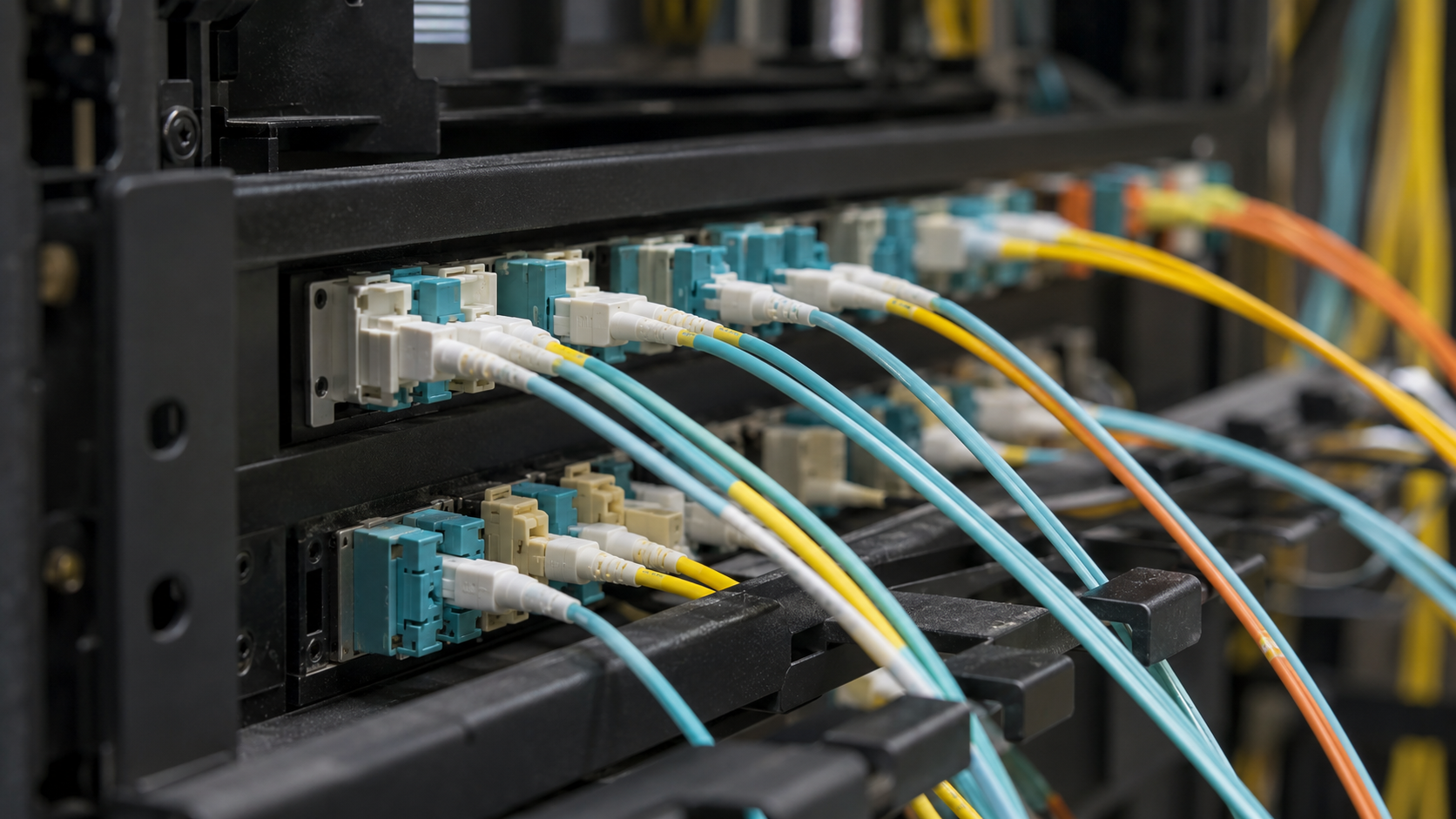
IOWN stands for Innovative Optical and Wireless Network. In NTT's description, it is a next-generation information and communications infrastructure centred on optical technology. The central idea is straightforward: conventional networks can use fibre for a section of transmission but repeatedly turn signals into electricity for routing and processing. IOWN seeks to extend photonics further through the network and eventually toward computing hardware.
That does not mean every IOWN reference describes a fully optical computer today. NTT says its All-Photonics Network completes communications optically rather than switching them back to electricity at network points. For computing, it separately describes a direction called photonics-electronics convergence: using optical waveguides in place of some electrical interconnects. These are related layers, not interchangeable names for a finished product.
The distinction matters for readers comparing infrastructure claims. Low latency, capacity and energy efficiency are design aims; a credible claim needs a named service, device stage, operating environment and measurement basis. The NTT IOWN technical overview is the primary source for the terminology used here.
The three IOWN building blocks

NTT's current English overview groups IOWN around three technical building blocks. The table is a reading guide, not a product comparison or performance ranking.
Swipe horizontally to view all columns.
| Term | Plain-English role | What a reader should verify | Primary source |
|---|---|---|---|
| All-Photonics Network (APN) | An optical communications layer intended to keep transmission optical across more of the path | Whether a named service is available in the relevant geography and what service-level terms apply | NTT IOWN overview |
| Photonics-Electronics Convergence (PEC) | Device work that uses light for connections where electrical wiring normally moves signals | Whether the claim is a component, a prototype, a product or a deployed system | NTT IOWN overview |
| AI Computing Platform (AICP) | A computing-infrastructure concept involving hardware-software optimization and flexible allocation | Whether a specific workload, customer deployment and power measurement are disclosed | NTT IOWN overview |
The sequence is important. APN concerns the communications path. PEC concerns how computing hardware can connect components with light. AICP is the broader computing layer that NTT says can combine resource allocation with hardware-software optimization. Calling all three simply "fibre" misses the part of the programme aimed at data-centre and server design.
For an international reader, this is also a useful Japan-to-global connection. NTT, Intel and Sony established the IOWN Global Forum in January 2020; NTT DOCOMO BUSINESS says that more than 170 companies and universities were participating as of February 2026. Membership is an ecosystem signal, however, not proof that each member has adopted a commercial IOWN service.
What has launched and what remains a target

NTT's public chronology says APN IOWN 1.0 launched in 2023 and calls it the first commercial service for realizing the IOWN concept. That is the clearest line between a live service and the longer technical roadmap.
NTT describes IOWN 2.0 as a board-connected photonics-electronics device stage. Its later labels are explicitly forward-looking: the company says IOWN 3.0 targets 125 times capacity and IOWN 4.0 targets 100 times power efficiency, with progress targets shown for 2029 and 2032 respectively. Those figures are objectives under NTT's framing; they are not a reader's current network benchmark and should not be compared casually with a data centre's present power-usage metric.
Swipe horizontally to view all columns.
| Roadmap label | Status described by NTT | Reader-safe interpretation | Evidence |
|---|---|---|---|
| APN IOWN 1.0 | Service launched in 2023 | A commercial starting point for the concept, not proof of universal adoption | NTT history |
| IOWN 2.0 | Board-connected PEC device stage | Development extends photonics into computing interconnects | NTT IOWN overview |
| IOWN 3.0 | 2029 progress target | Capacity target, not current operating performance | NTT IOWN overview |
| IOWN 4.0 | 2032 progress target | Power-efficiency target, not a current product specification | NTT IOWN overview |
This status check is the article's main practical payoff. A roadmap can be strategically meaningful while still being unsuitable as a near-term revenue forecast or a verified engineering result.
Why AI and data centers put IOWN in focus
AI workloads make the movement of data, as well as the calculation itself, more important. NTT frames AIOWN around optimizing resources including GPUs, networks and power. The company also describes AICP as a way to allocate computing components more flexibly and to reduce power from electrical wiring through PEC. These descriptions identify the bottleneck that IOWN is trying to address; they do not establish that one optical architecture will fit every cloud or enterprise workload.
The right evidence is therefore operational. Look for a disclosed customer use case, distance or topology, workload, latency definition, energy baseline and whether a result comes from a laboratory, a proof of concept or a production service. For example, NTT's 2025 construction-site release describes a planned proof-of-concept phase for tunnel use cases. It is evidence of a possible application and technical evaluation work, not evidence that autonomous construction control has become a standard network deployment.
That framing also keeps the investment case honest. IOWN can be relevant to NTT's long-term technology position, but an infrastructure concept alone does not determine revenue, margins, capital expenditure, competition or a share-price outcome. Readers examining the listed company can pair this technology context with ATG Press's NTT dividend and buyback guide, which addresses a separate capital-return question.
A practical checklist for reading an IOWN claim
Before repeating a claim about IOWN, ask five questions:
1. Which layer is meant? APN service, PEC hardware or an AICP-style computing architecture are different things. 2. What is the maturity? Mark it as commercial service, prototype, proof of concept, device stage or target. 3. What exactly is measured? Capacity, latency and energy claims need a stated baseline and test environment. 4. Who is operating it? A forum member, technology partner and paying production customer are not equivalent categories. 5. What is the economic link? Separate a technical possibility from disclosed revenue, investment, cost or customer adoption.
The same discipline helps when comparing Japanese technology suppliers. ATG Press's Japanese semiconductor stocks research guide is a separate starting point for mapping companies to the supply chain; it should not be read as evidence that each company participates in IOWN.
Sources
- NTT: Functions and Characteristics of IOWN — official English overview of APN, PEC, AICP and the IOWN road-map labels; accessed 2026-10-07.
- NTT: Medium-Term Management Strategy — official English IR strategy page, last updated 2026-05-08; accessed 2026-10-07.
- NTT Group history — official English chronology of the 2023 APN IOWN 1.0 launch; accessed 2026-10-07.
- NTT DOCOMO BUSINESS: What's IOWN — official English explanation of IOWN and the IOWN Global Forum participation figure; accessed 2026-10-07.
- NTT and Hazama Ando construction-site use-case release — official English release on planned proof-of-concept work; dated 2025-08-07 and accessed 2026-10-07.
Disclaimer
This article is for informational purposes only and does not constitute investment advice. Technology roadmaps, customer trials and corporate strategy statements can change and do not predict investment returns.

