

Arm reported $715 million of royalty revenue for the three months ended 30 June 2026, or 55.5% of its $1.289 billion total revenue. The practical point is not simply that royalties were the larger line: Arm says it recognises them on an accrual basis when customers ship chips containing its technology, then adjusts estimates when licensees' later reports or audit resolutions provide new information.
That makes the royalty line a useful measure of Arm-based chip activity, but not a real-time shipment counter, a cash-receipt figure or a promise about the next quarter. The company reported another $574 million of licence and other revenue in the same period. Reading those two lines together is the clearest way to understand how Arm makes money from intellectual property (IP).
Arm royalty revenue: key takeaways

- Arm reported $715 million of royalty revenue in Q1 FY2027, up from $585 million in the comparable prior-year quarter.
- Royalty revenue was 55.5% of the $1.289 billion quarterly total; licence and other revenue was 44.5%.
- A royalty is generally tied to a customer's Arm-based chip shipment. Licence and other revenue can include licence access, support, tools, services and milestone-based payments.
- Arm accrues royalty revenue using estimates and later updates it as licensee reports and audit information arrive. A reported quarter is therefore not a same-day readout of every customer's end-market sales.
How Arm's two revenue lines work

Arm's Q1 FY2027 quarterly report says most IP licences have two components. Licence fees plus support and maintenance are recognised as licence and other revenue; per-chip fees are recognised as royalty revenue. Some licence arrangements can also include payments that are date-based or linked to an event such as a first chip-design tape-out.
The distinction matters because the lines answer different questions. Licence and other revenue can reflect access to designs, tools, services, support and the timing of contractual milestones. Royalty revenue is the running monetisation line once customers ship chips incorporating Arm technology. Neither line, by itself, is a direct measure of cash collected in the quarter.
Swipe horizontally to view all columns.
| Three months ended 30 June | Licence and other revenue | Royalty revenue | Total revenue | Royalty share of total |
|---|---|---|---|---|
| 2026 (Q1 FY2027) | $574m | $715m | $1,289m | 55.5% |
| 2025 (Q1 FY2026) | $468m | $585m | $1,053m | 55.6% |
| Year-on-year change | +23% | +22% | +22% | -0.1 percentage point |
The table uses Arm's reported amounts. The 55.5% and 55.6% figures are ATG Press calculations rounded from the reported totals. They are revenue-mix calculations only; they do not describe gross margin, free cash flow, bookings or the amount of royalty cash that arrived during the quarter.
Why a reported royalty figure can change
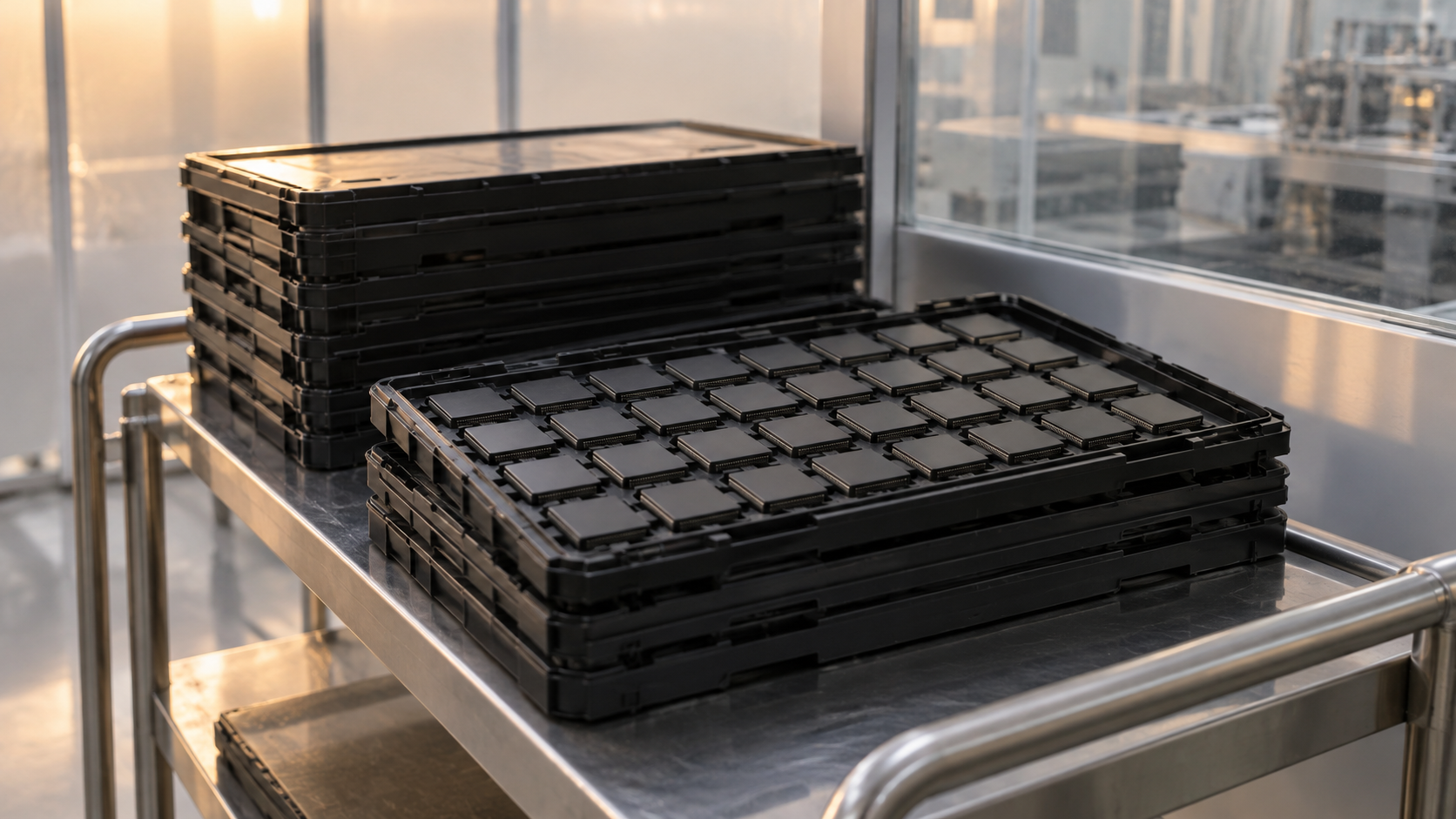
Arm says it recognises royalties in the quarter when a customer ships a chip containing its technology. The company estimates the accrual using historical sales trends, macroeconomic factors, customer royalty reports and forecasts, plus third-party industry data. Its listed inputs include revenue, unit shipments, average selling price, product mix, market share and market penetration.
The same filing says subsequent adjustments are required when new information becomes available, primarily from actual licensee reports in the period after the accrual and from royalty-audit resolutions. That is the central limitation on a headline royalty number: it is an accounting estimate made for the shipping quarter, not a complete final count available at quarter end.
For readers comparing quarterly results, the useful checks are therefore: whether royalty growth came with a similar change in licence and other revenue; whether Arm identifies mix, unit shipments or customer demand as drivers; and whether the discussion distinguishes a reported result from a future outlook. The disclosure supports analysis of the reporting mechanics; it does not support a price prediction.
The $715m figure in annual and end-market context
Arm's FY2026 results release reported $4.92 billion of total revenue and $2.61 billion of royalty revenue for the year ended 31 March 2026. Royalties therefore represented about 53.0% of FY2026 total revenue, based on the reported figures. The latest 55.5% quarterly share is close enough to show why the line deserves attention, but one quarter does not establish a permanent mix.
The annual report supplies another useful limit. It says mobile application processors accounted for about 43% of FY2026 royalty revenue. Arm also identifies automotive, cloud and AI data centres, internet-of-things devices, personal computers and robotics as areas it is pursuing. A shift in end-market demand, chip mix, average selling price or customer shipments can affect royalties without a one-for-one change in every other Arm revenue line.
Arm's ownership is also material to ATG Press readers: the company identifies SoftBank Group Corp. as its controlling shareholder in its current filing. That makes this a Japan-connected global subject, not a claim that Arm's reported revenue is a Tokyo-market metric. Readers looking at the broader Japan semiconductor landscape can also use ATG Press's Japanese semiconductor stocks research guide.
ARM share chart: context, not the evidence
TradingView resolves `NASDAQ:ARM` to Arm Holdings plc's Nasdaq-traded security. The chart is included only to identify the market instrument and provide price context. Corporate revenue, royalty-recognition and ownership claims in this article come from Arm's filings and results releases, not from the chart. Market data may be delayed.
What to check in the next Arm report
- Keep the two lines separate. Start with reported licence-and-other revenue, royalty revenue and total revenue before drawing conclusions from a single headline.
- Read the stated driver. Arm's disclosure may point to chip shipments, product mix, average selling price, end-market demand, licensing milestones or another factor; these are not interchangeable.
- Watch the estimate boundary. Later licensee reports and audit resolutions can change accrued royalty revenue, so compare reported results with the company's updated explanation rather than treating an initial number as a real-time feed.
- Use the appropriate source. The company filing supports reporting mechanics. It does not establish a share-price target, a recommendation or a forecast of future royalties.
Sources
- Arm Holdings plc, Form 6-K / quarterly report for the three months ended 30 June 2026, filed 29 July 2026; accessed 13 September 2026.
- Arm Holdings plc, annual report for the year ended 31 March 2026, filed 10 June 2026; accessed 13 September 2026.
- Arm, fourth-quarter and FY2026 results, published 6 May 2026; accessed 13 September 2026.
- TradingView, Arm Holdings plc — NASDAQ:ARM, accessed 13 September 2026; chart context only.
This article is for informational purposes only and does not constitute investment advice.

