
Key Takeaways
- i GRID SOLUTIONS Inc. is scheduled to list on the Tokyo Stock Exchange Growth Market on July 29, 2026, under code 603A, according to the Tokyo Stock Exchange listing outline.
- The company is not a simple solar developer. Its disclosed model combines onsite solar power purchase agreements, storage and EV-related services, energy trading and a platform for managing distributed energy resources.
- The offering and sale price was set at JPY 770 per share after book-building, with 2.689 million newly issued shares, 8.0515 million secondary shares and 1.611 million over-allotment shares, according to i GRID's July 17 pricing release.
- i GRID forecasts FY2027 revenue of JPY 30.966 billion and net income of JPY 2.140 billion, but it also forecasts zero dividends and says retained earnings should fund growth investment.
- The listing is a timely test of how Japan's market values distributed-energy infrastructure: attractive policy tailwinds, but also construction, power-market, inflation, regulation and balance-sheet risks.
Why This Listing Matters Beyond Tokyo

i GRID SOLUTIONS is coming to market at a point when Japan's energy transition is becoming less about giant renewable projects alone and more about the hard operating work of connecting many small power assets. The company is scheduled to debut on the TSE Growth Market on July 29, 2026, as an Electric Power & Gas industry issuer with code 603A and ISIN JP3101070005, according to the JPX English listing outline.
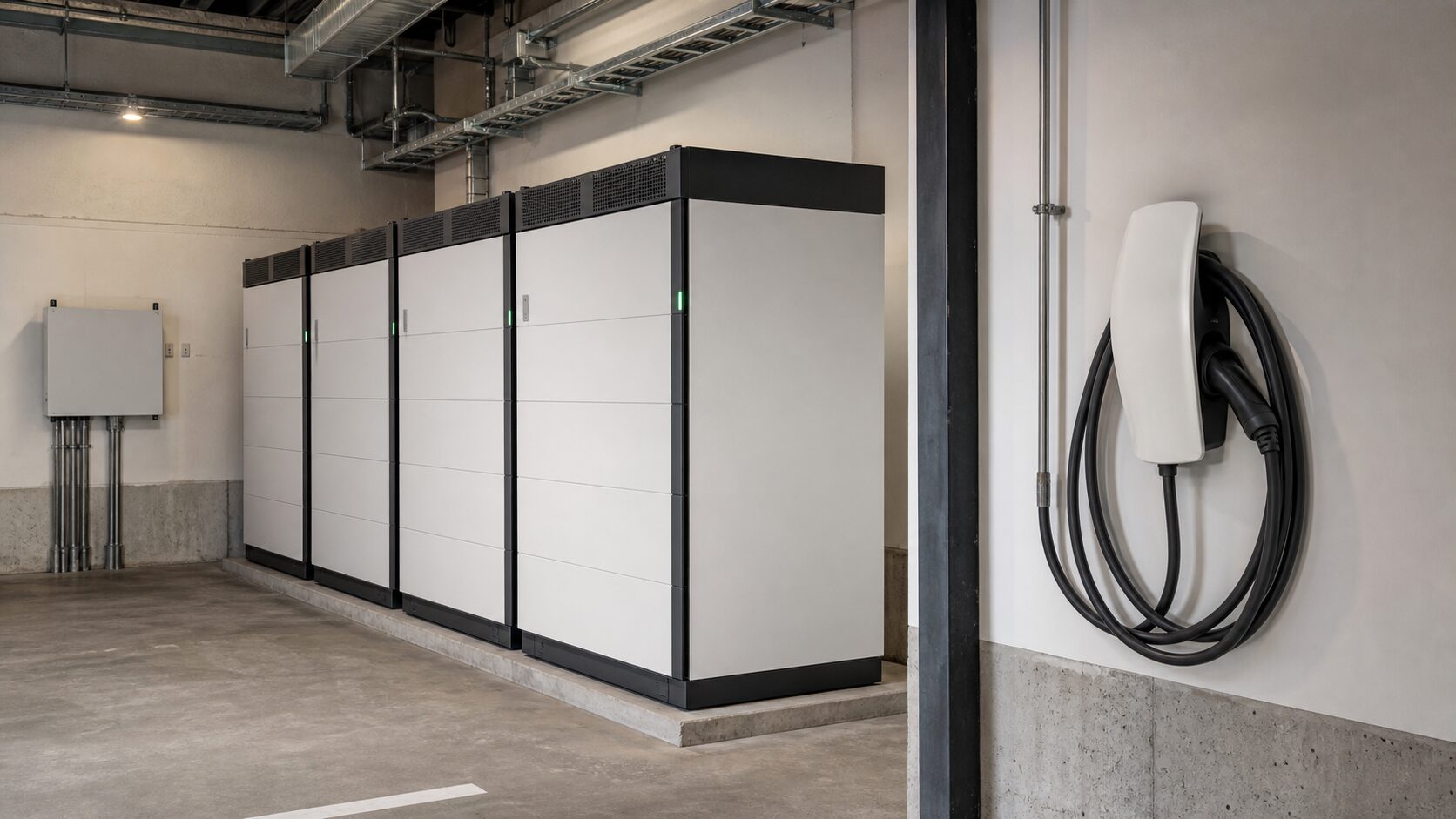
For overseas readers, the important point is the business model. i GRID develops and operates platforms that integrate distributed energy resources, develops onsite solar plants, provides storage and EV-related Green Transformation services, and runs energy trading services for renewable power circulation. Green Transformation, or GX, is Japan's shorthand for industrial and corporate decarbonization tied to energy security and competitiveness.
The IPO also has an international distribution element. In the company's offering materials, 2.044 million of the purchased-and-underwritten secondary shares are planned for sale to overseas investors mainly in Europe and Asia, excluding the United States and Canada. That makes the deal a small but useful signal of global investor appetite for Japan's distributed-energy infrastructure names before the shares begin trading.
Swipe horizontally to view all columns.
| Item | Disclosed detail | Date or period | Source |
|---|---|---|---|
| Scheduled listing | TSE Growth Market, code 603A | July 29, 2026 | JPX listing outline |
| Offering and sale price | JPY 770 per share | Decided July 17, 2026 | i GRID pricing release |
| Public offering | 2.689 million newly issued shares | IPO terms | JPX listing outline |
| Secondary distribution | 8.0515 million underwritten secondary shares | IPO terms | JPX listing outline |
| Over-allotment | 1.611 million shares | IPO terms | i GRID pricing release |
| Shares outstanding at listing | 34.799 million, before later possible changes | At listing | JPX listing outline |
The Model Is Rooftops Plus Balancing
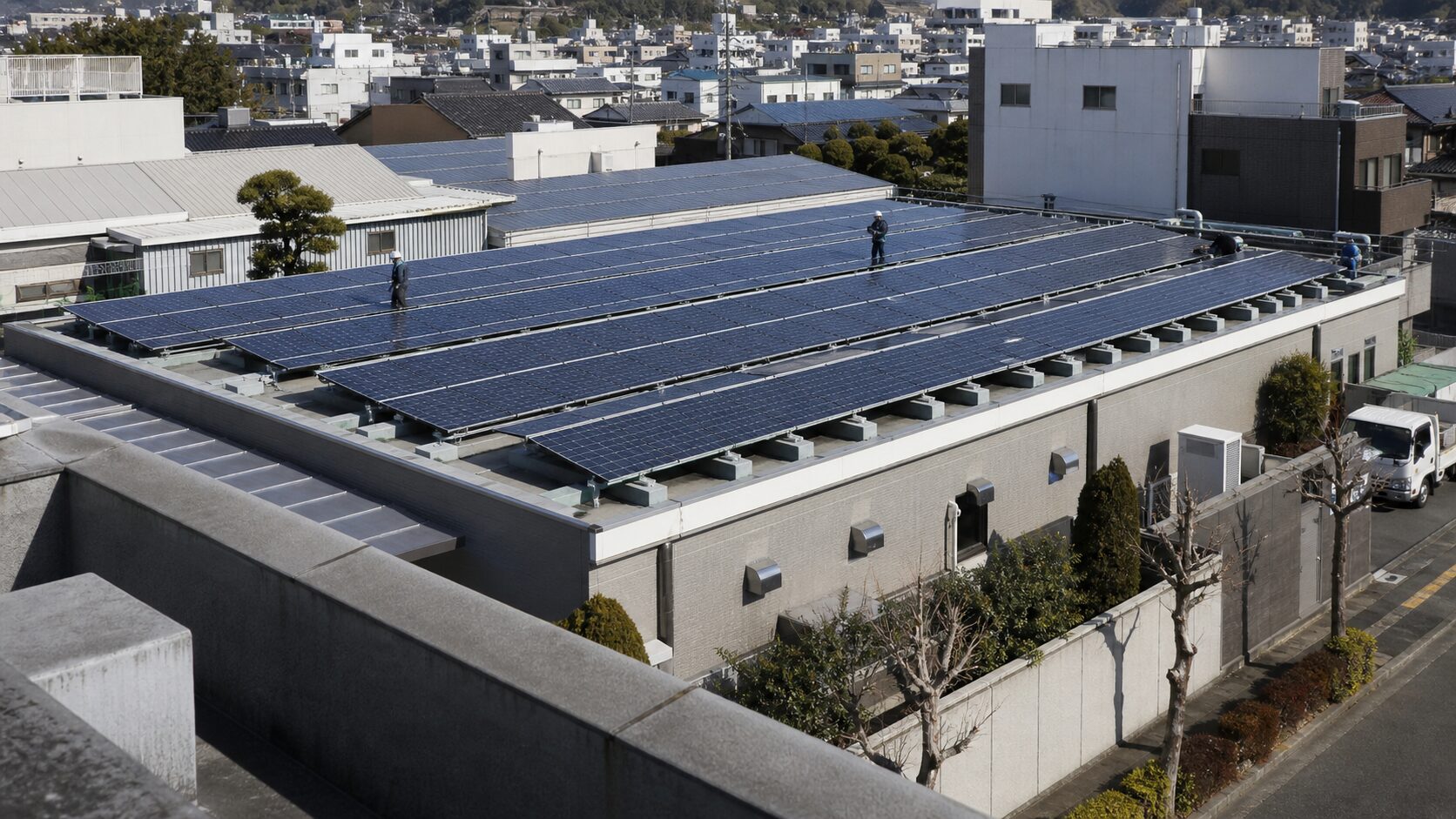
i GRID's central pitch is that commercial rooftops can become a distributed power network rather than isolated solar installations. In the initial listing application securities report, the company describes four linked functions: creating and using renewable energy, controlling it with batteries and other tools, sending surplus electricity to other users, and connecting third-party renewable assets with its customer network.
The distinction matters because many onsite solar projects are sized to avoid surplus power. i GRID says its model can aggregate surplus electricity from onsite solar facilities and supply it to other demand customers through its energy-trading business. That depends on both physical assets, such as commercial rooftops and batteries, and digital tools for forecasting generation and demand.
As of March 31, 2026, i GRID said solar facilities operating through its main services had reached 1,461 sites and 390 MW of capacity in its FY2026 and FY2027 forecast release. The securities report separately says the core onsite-solar development record was 1,410 sites and about 357 MW as of the same date, with 373 contracted development pipeline projects. Those figures are not identical because they are framed around different disclosed service definitions, so they should not be merged casually.
The model is also tied to corporate demand. i GRID says that, as of March 31, 2026, its onsite PPA installations had been adopted by 11 of 18 TSE Prime-listed general merchandise store and supermarket operators. A power purchase agreement, or PPA, lets a host customer use electricity from equipment installed by another party, often with little or no upfront equipment spending by the host.
Financial Profile And Use Of Proceeds

i GRID is already profitable, but its growth case depends on reinvestment rather than near-term shareholder distributions. In its forecast release, the company forecasts FY2026 revenue of JPY 25.464 billion, up 11.0%, and FY2027 revenue of JPY 30.966 billion, up 21.6%. It forecasts FY2027 operating profit of JPY 3.844 billion and net income of JPY 2.140 billion.
The segment mix is important. The company forecasts GX Solutions revenue of JPY 13.442 billion for FY2026 and JPY 17.147 billion for FY2027, compared with Energy Trading revenue of JPY 12.255 billion and JPY 14.176 billion. The company notes that the segment totals differ from companywide revenue because of intersegment eliminations.
Swipe horizontally to view all columns.
| Metric | FY2025 actual | FY2026 company forecast | FY2027 company forecast | Definition and source |
|---|---|---|---|---|
| Revenue | JPY 22.939 billion | JPY 25.464 billion | JPY 30.966 billion | Companywide revenue; forecast release |
| Operating profit | JPY 3.139 billion | JPY 3.238 billion | JPY 3.844 billion | Companywide operating profit; forecast release |
| Net income | JPY 1.595 billion | JPY 1.723 billion | JPY 2.140 billion | Companywide net income; forecast release |
| GX Solutions revenue | JPY 8.920 billion | JPY 13.442 billion | JPY 17.147 billion | Segment revenue before companywide eliminations; forecast release |
| Energy Trading revenue | JPY 14.219 billion | JPY 12.255 billion | JPY 14.176 billion | Segment revenue before companywide eliminations; forecast release |
| Dividend per share | JPY 0.00 | JPY 0.00 | JPY 0.00 | Company forecast and dividend policy; JPX securities report |
The IPO proceeds reinforce the reinvestment story. The offering-resolution materials say estimated maximum net proceeds from the public offering and the possible third-party allotment total JPY 2.77476 billion, based on the assumptions disclosed at filing. The planned uses are equipment investment and related costs, system development, hiring and training, and external consulting. The largest item is PPA-related equipment investment and related costs.
This is where international investors need to be precise. A zero-dividend forecast is not automatically negative for a growth company, but it means the return story depends on capital deployment, project execution and market valuation. The securities report says i GRID has not paid dividends since founding and plans to prioritize internal reserves for growth investment, research and development, organizational buildout and financial strengthening. Any future dividend timing remains undecided.
The Risks Sit In Execution, Power Markets And Capital Intensity
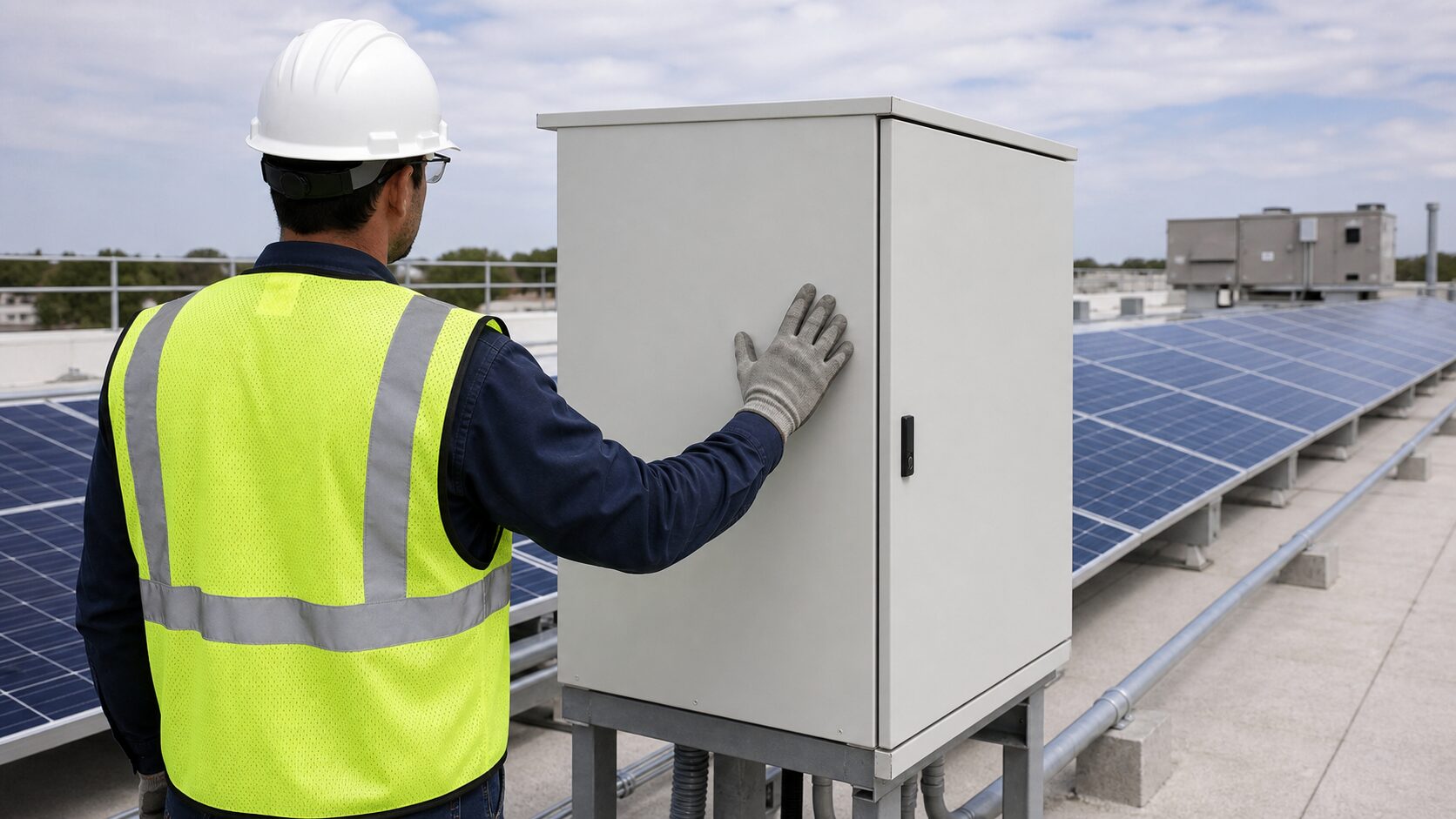
The attractive part of distributed energy is also the hard part: scale requires many small projects to be built, connected, financed and operated. i GRID discloses several risks in the JPX securities report, including curtailment for surplus-power facilities, long-term fixed PPA prices in an inflationary environment, higher equipment and labor costs, regulatory changes, and construction delays tied to customer sites, engineering contractors, grid-connection procedures, weather and equipment supply.
The balance sheet should also stay in view. PPA assets can produce recurring revenue, but they require upfront equipment investment and can bring lease obligations and other long-term financing needs. The company is raising public-market capital partly because the model is capital-hungry.
Swipe horizontally to view all columns.
| Risk area | Why it matters | Disclosure basis |
|---|---|---|
| Output curtailment | Surplus-power sites can face curtailment even though self-consumption sites were about 66% of generation capacity as of March 31, 2026. | JPX securities report |
| Inflation and fixed PPA prices | Long-term customer selling prices can become less attractive if costs rise faster than contract pricing. | JPX securities report |
| Equipment and labor costs | Solar equipment, materials and EPC labor costs can raise project-development costs. | JPX securities report |
| Construction timing | Customer-site conditions, grid procedures, weather and contractor capacity can delay or cancel installations. | JPX securities report |
| Regulation | Electricity, renewable-energy and climate-related rules could change business economics. | JPX securities report |
There is no TradingView chart in this article because the shares had not begun trading during the publication workflow. The correct external-widget instrument could not be verified before the July 29 debut without risking an invalid or fallback symbol.
What To Watch After July 29
The first thing to watch is not the first-day stock move in isolation. It is whether public-market scrutiny changes how investors frame onsite solar PPAs: as infrastructure-like recurring cash flow, as a development pipeline with execution risk, or as a hybrid technology and power-trading platform.
The second marker is project conversion. i GRID's disclosed growth relies on completed facilities, contracted pipeline and the ability to turn roofs, batteries, EV chargers and surplus electricity into predictable economics. Delays, cost inflation or weaker power-trading margins would matter more than a single headline revenue number.
The third marker is capital allocation. The company is telling investors that retained earnings and IPO proceeds should support growth rather than dividends. That can be rational for a company still expanding its asset base, but the market will eventually ask whether reinvested capital is producing durable returns.
For now, 603A is a useful window into a broader Japanese theme: the country's energy transition is moving from policy targets toward thousands of operational decisions on rooftops, in retail facilities, inside grid-connection processes and across corporate energy budgets.
Sources
- Tokyo Stock Exchange, Outline of Initial Listing Issue: i GRID SOLUTIONS Inc., dated June 25, 2026.
- Japan Exchange Group, Initial Listing Application Securities Report, Part I: i GRID SOLUTIONS Inc., dated June 25, 2026.
- i GRID SOLUTIONS, Determination of Issue Price and Offering Price and Over-Allotment Share Count, dated July 17, 2026.
- i GRID SOLUTIONS, FY2026 and FY2027 Earnings Forecasts, dated June 25, 2026.
- Ministry of Economy, Trade and Industry, Cabinet Decision on the Seventh Strategic Energy Plan, dated February 18, 2025.
Disclaimer
This article is for informational purposes only and does not constitute investment advice. Company forecasts are management estimates as of the cited disclosures and may differ from actual results.

