
Marumae has made its `Fusion2028` plan materially harder to achieve. The Tokyo-listed semiconductor-equipment parts supplier now targets JPY 32.0 billion in FY2028 sales, JPY 8.2 billion in operating profit and 25% return on invested capital, or ROIC. The previous targets were JPY 25.0 billion, JPY 5.6 billion and 15%.
The revision matters because it is not only a higher semiconductor-cycle forecast. Marumae is asking two businesses to scale together: its original precision-machining operation and KM Aluminum, or KMAC, the high-purity aluminum and functional-materials company it acquired in April 2025. The test for international investors is whether that combination can raise margins faster than it expands the capital base.
Key Takeaways
- Marumae raised its FY2028 sales target by 28.0%, operating-profit target by 46.4% and ROIC target by 10 percentage points.
- From the current FY2026 forecast, sales must grow by 60% in two years while operating profit doubles.
- Precision components are expected to reach a 32% segment operating margin; functional materials are expected to reach 20% after goodwill and related amortization.
- Demand is supportive: Marumae reported record quarterly semiconductor sales and orders, while KMAC's semiconductor-equipment materials were stronger than initially expected in the first nine months of FY2026.
- The harder part is capital efficiency. The group is accelerating investment, carrying acquisition debt and amortizing KMAC-related goodwill while targeting 25% ROIC.
This is a company-plan analysis, not a forecast of the share price. For the wider policy context, ATG Press explains how the Tokyo Stock Exchange's cost-of-capital disclosure list turns ROIC and valuation claims into measurable investor questions.
What Changed in Marumae Fusion2028
The board approved the revised numerical plan on August 21, 2026. Marumae cited a semiconductor market expanding faster than originally expected, higher KMAC demand and utilization, a greater share of production being handled internally, new-customer sales and group-wide price increases.
Swipe horizontally to view all columns.
| Fusion2028 metric | Previous FY2028 target | Revised FY2028 target | Change | ATG Press reading |
|---|---|---|---|---|
| Net sales | JPY 25.0 billion | JPY 32.0 billion | +JPY 7.0 billion; +28.0% | Both operating segments must expand materially |
| Operating profit | JPY 5.6 billion | JPY 8.2 billion | +JPY 2.6 billion; +46.4% | Profit must grow substantially faster than sales |
| Implied operating margin | 22.4% | 25.6% | +3.2 percentage points | Utilization, internal production and pricing must outweigh added costs |
| Consolidated ROIC | 15% | 25% | +10 percentage points | The plan must control invested capital as well as raise profit |
| Dividend payout policy | At least 35% | At least 35% | Unchanged | Shareholder returns remain linked to earnings and investment needs |
| Annual minimum dividend | JPY 30 | JPY 30 | Unchanged | Subject to reconsideration if full-year net income is negative |
The revision is large relative to the current baseline. Marumae's latest Q3 FY2026 presentation gives a full-year forecast of JPY 20.0 billion in sales and JPY 4.1 billion in operating profit. Reaching the new FY2028 plan therefore requires roughly 26.5% annualized sales growth and 41.4% annualized operating-profit growth over two years. Those growth rates are ATG Press calculations from the company's disclosed figures.
The Plan Is a Two-Engine Execution Test
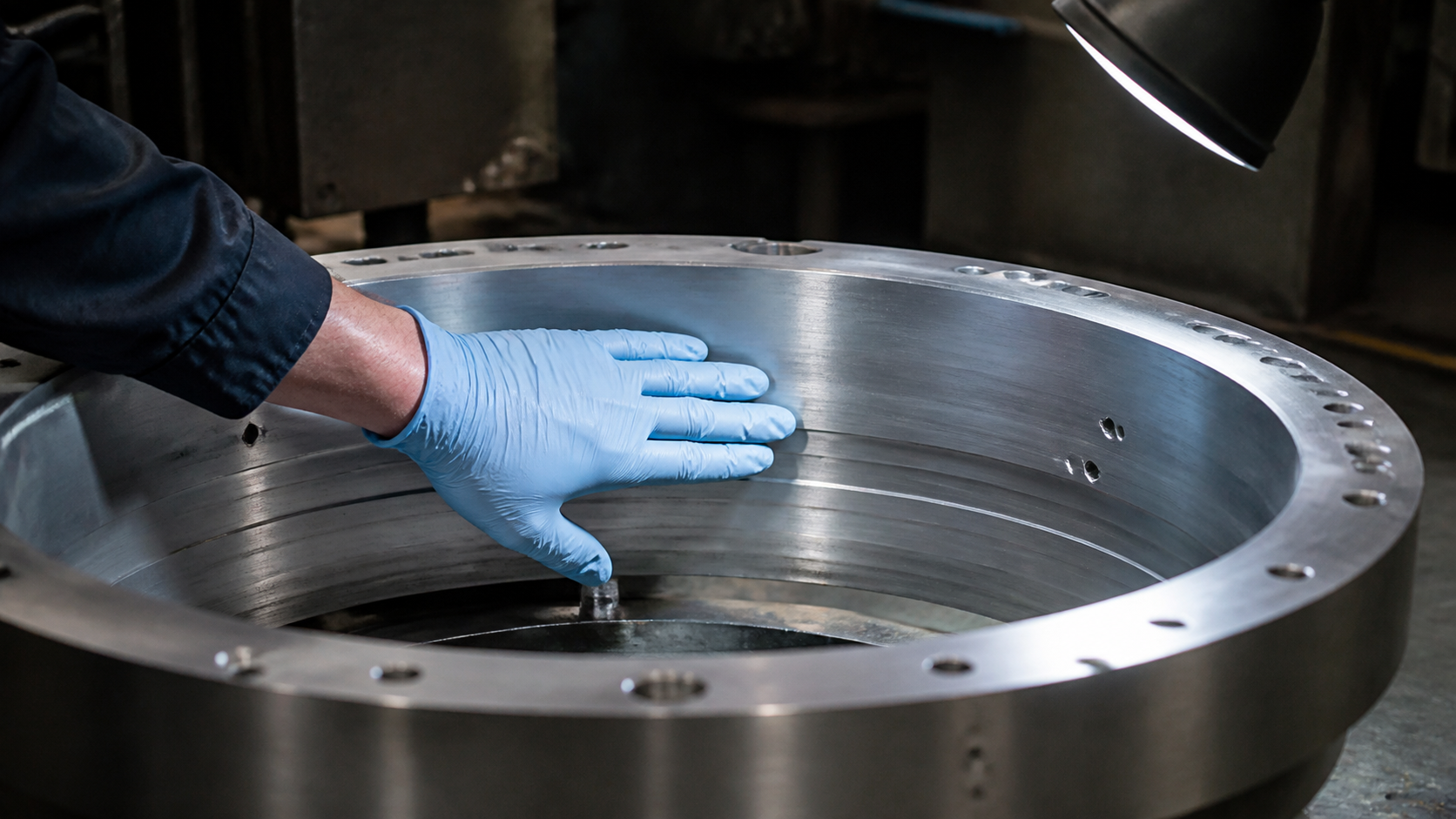
The first engine is Marumae's precision-components business. It machines vacuum and other high-precision parts used in semiconductor and flat-panel-display production equipment. The revised plan targets FY2028 segment sales of JPY 14.5 billion and operating profit of JPY 4.7 billion, implying a 32% margin.
Marumae expects semiconductor-related precision-component sales to rise from JPY 7.6 billion in the FY2026 budget to JPY 12.5 billion in FY2028. Management points to a rapidly expanding market, more products supplied to existing customers, production growth at customers already won, and price increases. Flat-panel-display sales are expected to rise more modestly, while capacity constraints limit the near-term contribution from defense and satellite work.
The second engine is KMAC's functional-materials business. KMAC supplies ultra-high-purity aluminum for sputtering targets, materials and chambers for semiconductor equipment, and basic materials used in hard-disk drives and electrolytic capacitors. The Marumae Integrated Report 2025 describes the acquisition thesis as a combination of KMAC's materials and surface-treatment expertise with Marumae's precision machining and welding.
The new plan assigns functional materials JPY 17.5 billion in FY2028 sales and JPY 3.9 billion in operating profit after goodwill and related amortization, for a 20% margin. The most aggressive bridge is semiconductor-equipment components: sales are expected to rise from JPY 2.3 billion in the FY2026 budget to JPY 6.5 billion in FY2028 as vacuum-chamber demand expands and KMAC adds capacity.
That creates diversification inside the semiconductor supply chain, but not complete insulation from it. Both engines still depend heavily on equipment demand, customer qualification, utilization and the timing of capacity additions. ATG Press's Rigaku semiconductor-metrology analysis offers a different example of how strategic ownership and specialized process technology can reshape a Japanese equipment supplier's investor case.
Why the 25% ROIC Target Is the Harder Promise
ROIC measures operating returns against the capital committed to the business. Raising the target from 15% to 25% signals that Marumae expects more than volume growth: new machinery, working capital, acquisition debt and intangible assets must generate substantially better returns.
At the end of the third quarter, Marumae reported JPY 10.857 billion of cash and deposits, JPY 11.859 billion of long-term borrowings, JPY 1.433 billion of short-term interest-bearing liabilities, and JPY 5.168 billion of goodwill and related assets. Its equity ratio had improved to 44.7%, helped by a share offering, but the capital base is still changing quickly.
The company raised JPY 5.848 billion through new shares and treasury-share disposal. It said JPY 3.5 billion would support Marumae and KMAC capital expenditure and JPY 2.34 billion would repay acquisition loans early. It also indicated that group capital expenditure could reach JPY 4.0 billion in the next fiscal year.
This financing mix creates a useful discipline test. Equity issuance reduces leverage and funds growth, but it also increases the capital on which future returns must be earned. Debt repayment lowers financing risk, while accelerated equipment spending can depress free cash flow before new capacity reaches efficient utilization. The 25% goal will become more credible only if operating profit rises alongside stable working-capital needs and controlled net investment.
That is the broader connection to Japan's corporate reform: growth investment and capital efficiency are not opposing goals when the project returns are visible and measured. ATG Press discusses that balance in its analysis of the Japan Corporate Governance Code and growth investment.
Market Growth Helps, but It Does Not Remove the Cycle
The industry backdrop is strong. SEMI's July 2026 mid-year equipment forecast projects global semiconductor manufacturing-equipment sales of USD 165.9 billion in 2026 and USD 229.5 billion in 2028. Wafer-fab equipment alone is forecast to reach USD 200 billion in 2028, supported by artificial intelligence, leading-edge logic, high-bandwidth memory and advanced device architectures.
Marumae's own operating signals match that direction. For the nine months through May 2026, sales rose to JPY 14.022 billion and operating profit to JPY 2.644 billion. The precision-components business reported record quarterly semiconductor sales and orders. KMAC reported strong high-purity sputtering-target materials, a sharp increase in vacuum-chamber production and solid basic-material demand.
Those data explain why management raised the plan, but they do not guarantee a straight line to FY2028. Semiconductor equipment remains cyclical. Customer inventory adjustments, delayed fab spending, export controls, qualification timing and capacity bottlenecks can all interrupt growth. Marumae itself had previously reduced targets and postponed investment when customer inventory corrections lasted longer than expected.
Dividends Stay Secondary to the Operating Test
Marumae retained a dividend payout target of at least 35% and an annual minimum dividend of JPY 30, or JPY 15 per half year. The minimum can be reconsidered if the group records a full-year net loss.
That policy offers a measurable return framework, but the August revision is not a new dividend increase. Investors should separate the unchanged distribution rule from the much higher earnings and ROIC targets. If the plan succeeds, the payout formula may translate higher profit into higher dividends. If investment, working capital or the cycle absorbs cash, the payout ratio alone does not guarantee a smooth dividend path.
For readers comparing Japanese payout frameworks, ATG Press's shareholder-return policy guide explains payout ratios, dividend on equity, progressive dividends and buybacks.
What Investors Should Check Next
Swipe horizontally to view all columns.
| Checkpoint | Evidence that supports the plan | Warning sign |
|---|---|---|
| Precision-component orders | New products move from qualification to volume production | Record orders fail to become sales or margins |
| KMAC chamber demand | Capacity additions lift output and utilization | Spending rises before customer demand is secured |
| Segment margins | Precision components approach 32%; functional materials move toward 20% after amortization | Pricing and utilization gains are offset by labor, depreciation or material costs |
| Capital efficiency | ROIC rises while debt, goodwill and working capital remain controlled | Profit rises but invested capital expands just as quickly |
| Cash allocation | Capital expenditure and loan repayment stay within disclosed financing plans | Further funding is required without a stronger earnings base |
| FY2026 result | Full-year sales and operating profit meet or exceed JPY 20.0 billion and JPY 4.1 billion | The starting point weakens before the two-year growth bridge begins |
The next full-year result is scheduled for October 9, 2026, according to Marumae's IR calendar. The most useful disclosures will be segment order trends, capital-expenditure timing, KMAC utilization, acquisition-debt reduction and management's ROIC calculation. Those figures will show whether `Fusion2028` is becoming an operating plan or remains mainly a favorable-cycle aspiration.
Sources
- Marumae Co., Ltd., Fusion2028 revised numerical plan, published August 21, 2026. Official Japanese title: `中期事業計画 改定資料` [Medium-Term Business Plan Revision Materials].
- Marumae Co., Ltd., Q3 FY2026 Consolidated Financial Results Presentation, published July 3, 2026.
- Marumae Co., Ltd., Integrated Report 2025, published December 2025.
- Marumae Co., Ltd., IR calendar, accessed August 22, 2026.
- SEMI, Global Semiconductor Equipment Sales Forecast to Reach a Record $229 Billion in 2028, published July 14, 2026.
Disclaimer
This article is for informational purposes only and does not constitute investment advice.

